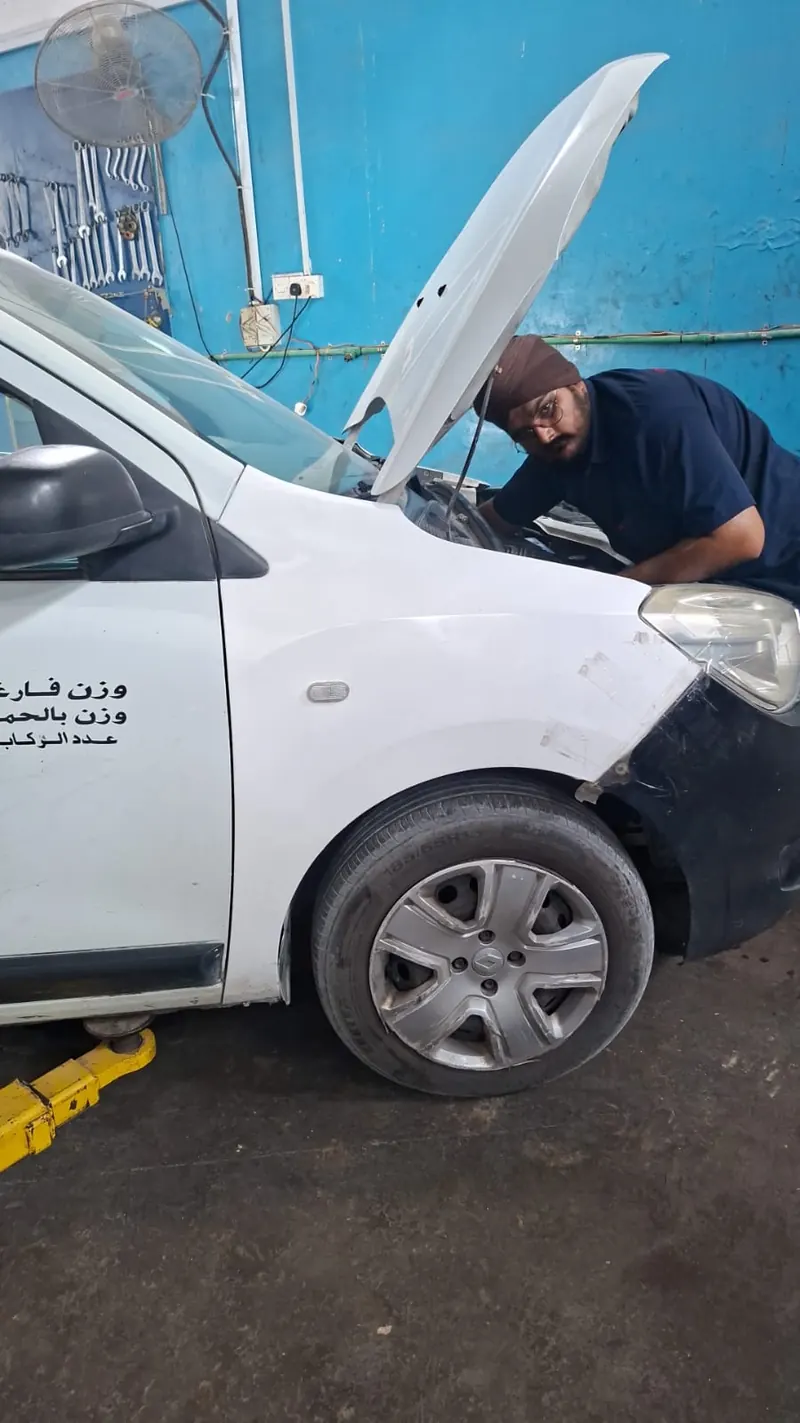
The check engine light — the orange engine-shaped symbol on your dashboard — is your car's engine management system telling you it has logged a fault. It could be something as minor as a loose fuel cap or as serious as a misfire that is overheating the catalytic converter. The light itself doesn't tell you which. Here's how to read the situation, and what we actually do when a car comes into our Sharjah workshop with the light on.
Solid light vs flashing light: the difference matters
- Solid (steady) light — a fault has been detected, but it's usually not an emergency. The car is normally safe to drive to a workshop in the next few days, as long as it's running and sounding normal.
- Flashing light — this almost always means an active, severe misfire. Unburnt fuel is going into the exhaust and can overheat and destroy the catalytic converter within a short distance. Reduce speed, avoid heavy acceleration and get the car checked straight away.
If the light comes on together with high engine temperature, low oil pressure, heavy smoke or a loss of power, stop somewhere safe and call for help rather than driving on.
The most common causes we see
Across the cars that come through our workshop, these are the usual suspects behind a check engine light:
- Loose or faulty fuel cap — the evaporative emissions system detects a leak. The cheapest possible fix, and worth checking first.
- Oxygen (O2) sensor faults — these sensors measure exhaust gases so the engine can adjust fuel mixture. A failing one raises fuel consumption.
- Ignition problems — worn spark plugs or a failing ignition coil cause misfires, often felt as shaking at idle or hesitation when accelerating.
- Mass airflow (MAF) sensor — often contaminated by dust, which is a real issue with UAE conditions and a dirty air filter.
- Catalytic converter efficiency — usually the result of another problem (like misfires) that was left unfixed.
- Vacuum leaks and sensor wiring — cracked hoses and heat-damaged connectors are common in engine bays that bake through a UAE summer.
Why "clearing the code" isn't a repair
A basic code reader can switch the light off, and some garages stop there. But the fault that triggered it is still present, and the light will come back — sometimes after the problem has got more expensive. A fault code also points to a system, not always a specific part. A code for a lean mixture, for example, could be a vacuum leak, a weak fuel pump, a dirty MAF sensor or a faulty O2 sensor. Replacing parts based on the code alone is how people end up paying for three parts to fix one fault.
How we diagnose it properly
When a car comes in with the check engine light on, we:
- Read all stored and pending codes with a full diagnostic scan tool, not just the generic engine codes
- Look at live data — sensor readings, fuel trims and misfire counters — while the engine runs
- Physically test the suspected component and its wiring before recommending any part
- Clear the codes after the repair and confirm the fault doesn't return on a test drive
You get a clear explanation and estimate before any work starts. If the light is linked to a deeper engine problem — heavy oil consumption or low compression, for example — read our guide to signs an engine needs an overhaul. For the full list of engine and electrical work we carry out, see our auto electrician service.
Quick answers
Is it safe to drive with the check engine light on?
If the light is solid and the car drives normally, it is usually safe to drive to a workshop in the next few days. If the light is flashing, or comes with overheating, low oil pressure or loss of power, reduce speed and get the car checked immediately.
Can a loose fuel cap really turn on the check engine light?
Yes. A loose or damaged fuel cap lets fuel vapour escape, and the evaporative emissions system logs it as a leak. Tighten the cap until it clicks; the light may take a few drive cycles to go off on its own.
Will the check engine light go off by itself?
Sometimes, if the fault was temporary. But the fault code stays stored in the engine computer, so it is still worth having it read to see what caused it.
Check engine light on? Get the fault codes read properly.