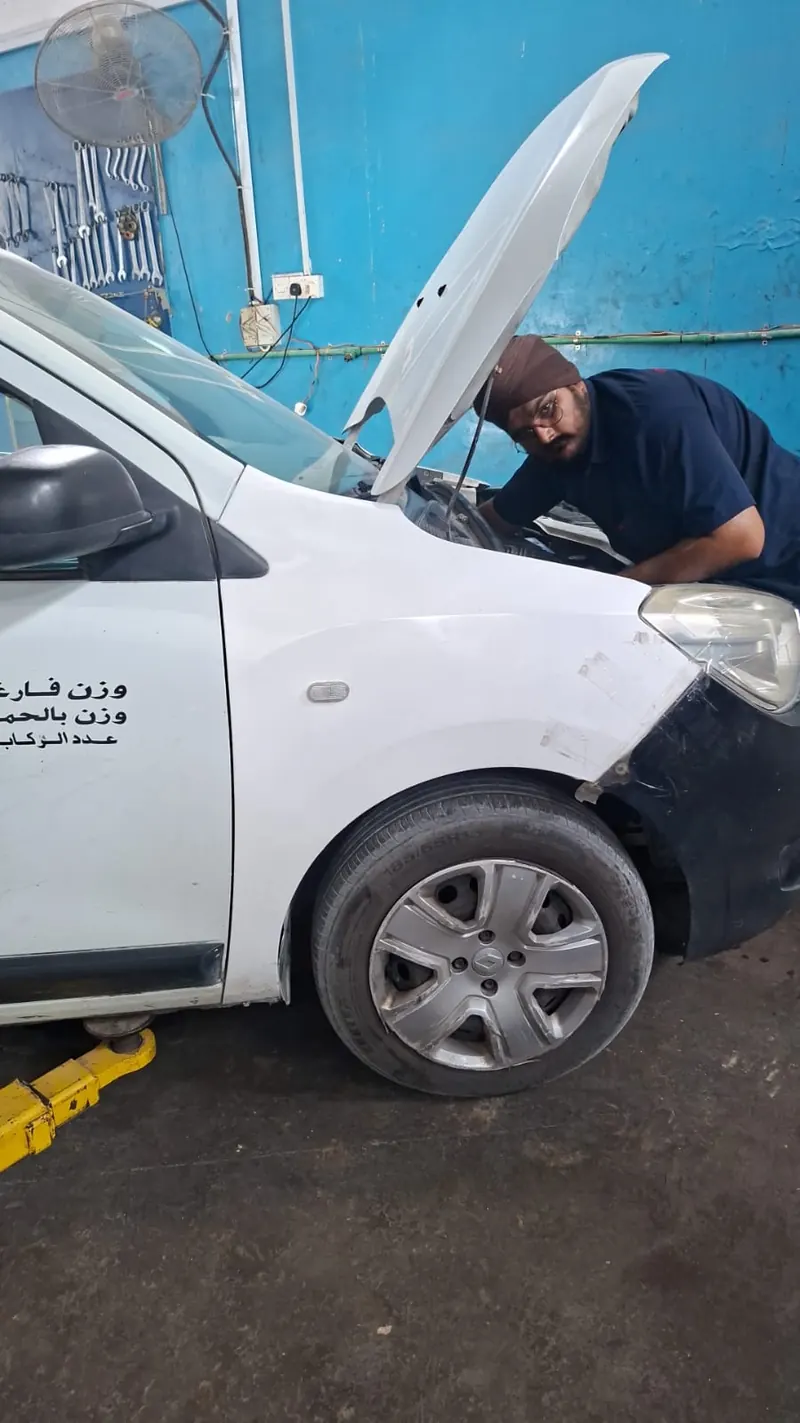
UAE summers push engine cooling systems harder than almost anywhere else: outside temperatures well above 40°C, stop-start traffic on busy Sharjah roads, and the AC running flat out. If a cooling system has a weak point, summer finds it. An overheating engine can warp the cylinder head, blow the head gasket and, in the worst case, destroy the engine — so it pays to act fast.
What to do if your car starts overheating
- Switch off the AC to take load off the engine.
- Turn the heater to full hot and the fan to maximum. It's unpleasant, but it moves heat away from the engine.
- Pull over somewhere safe as soon as you can and switch off the engine if the gauge is in the red or a warning light is on.
- Do not open the radiator or coolant cap while the engine is hot. The system is under pressure and boiling coolant can cause serious burns.
- Wait for the engine to cool before checking the coolant level in the reservoir.
- Don't keep driving on a hot engine. A short tow costs far less than a new engine.
Common causes of overheating in UAE conditions
- Low coolant — from a leaking hose, radiator, water pump or head gasket
- Radiator fan not working — a failed fan motor, relay, fuse or temperature sensor. Typical sign: the car is fine on the highway but overheats in traffic
- Blocked or damaged radiator — dust, sand and debris clog the fins; internal scale builds up over time
- Faulty thermostat — stuck closed, it stops coolant reaching the radiator
- Failing water pump — often shown by a leak or noise at the front of the engine
- Old or wrong coolant — coolant loses its protection over time; mixing types can cause sludge
- Head gasket failure — look for white exhaust smoke, coolant loss with no visible leak, or bubbles in the coolant reservoir
How we diagnose overheating
We pressure-test the cooling system to find leaks, check fan operation and the sensors that control it, test the thermostat, inspect the radiator and water pump, and check for exhaust gases in the coolant, which points to a head gasket problem. Then you get a clear explanation and estimate. If the engine has already been badly overheated, a compression test tells us whether there is internal damage — see signs your engine needs an overhaul.
How to prevent overheating
- Check the coolant level regularly with the engine cold
- Have the cooling system inspected before summer, as part of your regular maintenance
- Replace coolant at the interval in your owner's manual
- Never ignore a temperature gauge that sits higher than usual
Cooling system and engine work is part of our engine repair service in Industrial Area 6, Sharjah.
Quick answers
Why does my car overheat in traffic but not on the highway?
At speed, air flows through the radiator naturally. In traffic the radiator fan does the work, so overheating only in traffic usually points to a fan, fan relay or sensor problem, or a blocked radiator.
Can I add water instead of coolant?
In an emergency, water can get you to a workshop, but it does not protect against corrosion or boiling the way coolant does. Have the system checked and filled with the correct coolant as soon as possible.
Is it safe to drive an overheating car?
No. Driving with an overheating engine can warp the cylinder head and blow the head gasket. Stop safely, let it cool, and have it checked.
Temperature gauge creeping up? Get the cooling system checked.