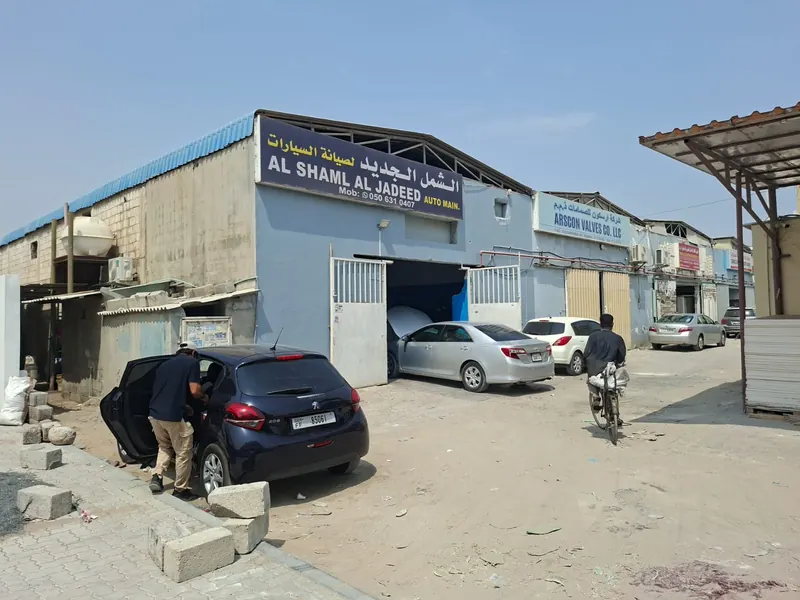
Open your owner's manual and you'll usually find two maintenance schedules: a normal one and a "severe service" one. Severe conditions typically include extreme heat, dusty or sandy roads, lots of short trips, long periods of idling and stop-start traffic. For most drivers in Sharjah and the wider UAE, that describes everyday driving. Following the severe schedule costs a little more in routine servicing — and a lot less in repairs.
Always check your own manual first, since intervals vary by make, model and engine. Below is how we'd approach maintenance for a typical car driven in UAE conditions.
Engine oil and oil filter
Heat and idling in traffic are hard on engine oil. Follow the interval in your manual for your oil type — and if your manual gives a shorter "severe" interval, use that one. Check the oil level on the dipstick every couple of weeks between services. An engine that keeps needing top-ups is telling you something; see signs your engine needs an overhaul.
Air filter and cabin filter
Dust is the big one here. A clogged engine air filter chokes the engine and can contaminate the airflow sensor. A clogged cabin filter is one of the most common reasons for weak AC airflow. Both should be inspected at every service and replaced more often than the "normal" schedule suggests.
Coolant and cooling system
The cooling system works hardest in summer traffic. Check the coolant level regularly (only when the engine is cold), and have the hoses, radiator, fan and coolant condition checked before summer. Overheating is one of the fastest ways to turn a small problem into major engine damage — see what to do if your car overheats.
Battery and charging
Heat shortens battery life dramatically. Test the battery at every service once it's more than two years old — our guide to car batteries in UAE heat covers the warning signs.
Brakes
Stop-start traffic wears pads and discs quickly. Have them measured at every service, and replace brake fluid at the interval in your manual — old fluid absorbs moisture and can affect braking. Any squealing, grinding, vibration or an ABS warning light should be checked promptly.
Tyres
Hot roads and under-inflation are a dangerous combination. Check tyre pressures at least every two weeks when the tyres are cold, using the figures on the sticker in the door frame. Look for cracks, bulges and uneven wear, and remember that tyres age even if the tread looks fine.
AC system
Have the AC checked before summer arrives, not in the middle of July. A pre-summer check covers cooling performance, the cabin filter and the condenser. If yours is already struggling, see what's really wrong when the AC isn't cooling.
A simple checklist
- Every 2 weeks: oil level, coolant level, tyre pressures, washer fluid
- Every service: oil and filter, air and cabin filters inspected, brakes measured, battery tested, belts and hoses checked, fault codes scanned
- Before every summer: AC performance, cooling system, battery test, tyre condition
- At manual intervals: spark plugs, brake fluid, coolant change, transmission fluid, timing belt (if fitted)
We handle full servicing alongside diagnostics and repairs — see our services, or book your car in.
Quick answers
Do UAE conditions count as severe driving?
For most drivers, yes. Owner's manuals usually list extreme heat, dust, short trips, idling and stop-start traffic as severe conditions, which describes a lot of everyday UAE driving.
How often should I check my tyre pressure in the UAE?
At least every two weeks, and before long trips, with the tyres cold. Use the pressures on the sticker in the driver's door frame, not the maximum printed on the tyre.
When should I get my car's AC checked?
Before summer starts. A pre-summer check catches low refrigerant, dirty cabin filters and weak fans before the hottest months.
Due a service? Book your car in this week.